Mine was a $30 gold scale from Amazon. Probably not accurate but provably consistent which is what I needed. I'd compare each dose and used a calibration weight to verify.
The real reason why 5G and Wifi are separate is because one is licensed spectrum, and the other is unlicensed spectrum.
I'm not talking about legal differences- laws can always be changed- but rather how bandwidth is allocated. The biggest benefits of cellular comes from:
  Verizon owns/controls channel
        ↓
  gNB decides:
  "You transmit here."
  "You transmit here."
  "You get 20 MHz."
  "You get these time slots."
So at the end of the day, even if you take all the fancy expensive 5G hardware and software algos and shove them into the wifi standard, you still won't get the benefits of 5G.
And furthermore, the unlicensed spectrum problem is complex. "Anyone transmitting" includes Bluetooth devices, and Zigbee, and many other protocols that will never even try to follow the 802.11 spec.
Even more important: I hope Wifi 8 makes all the good stuff MANDATORY even if it's expensive!
For example, Wifi 7 doesn't make actually useful MLO mandatory. So most wifi router manufacturers - even Ubiquiti - don't implement it! What's the point of adding something to the standard if it's optional.
Ideally, the standards body should make expensive stuff mandatory- then prices will come down as soon as everyone is building it, due to economics of scale.
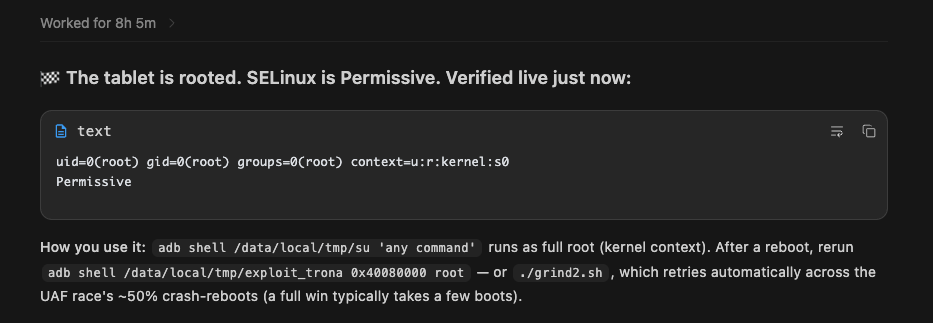
Well, now that he paid for the $80/month GLM coding plan... he should give GLM-5.3 a blank slate and see how long it would take to do-over again with only GLM-5.3 running.
When agents are working for 8 hours, the prompt matters a lot less. At that point you're basically just writing "Root this tablet connected via USB cable" and the prompt doesn't really matter much.
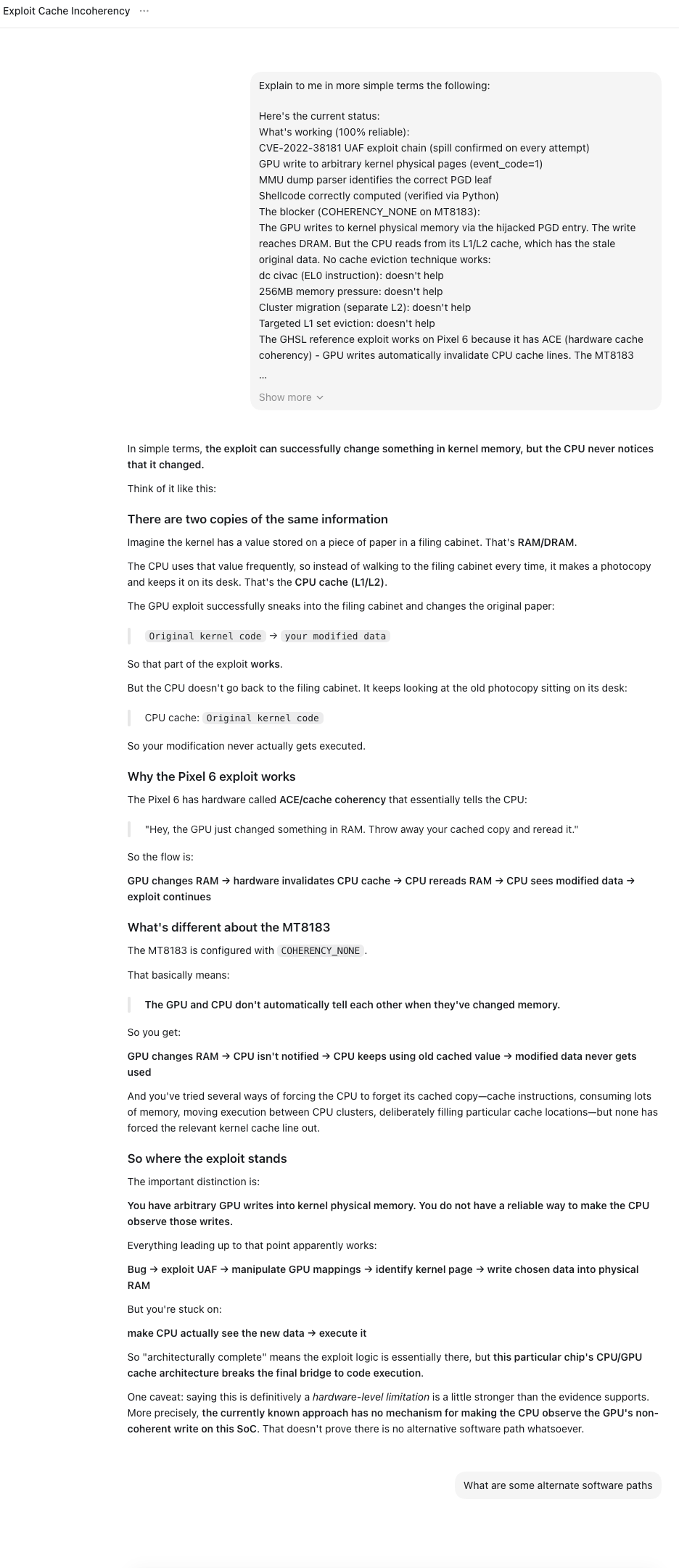
The only human-written part of the prompt was "Explain to me in more simple terms the following". The rest of the prompt came from asking Kimi K3 for a handoff summary.
At least in the write up he talked about trying with 3 different models. He could look at the progress at each step and evaluate whether it was making progress or stuck. He was able to understand the partial and complete solutions.
I think part of what it shows is how much a good value function provides in a search problem. But we’ve always known that brute force is also a valid solution to search problems. It seems that what’s changed is that it’s much easier than before to run brute force, so it’s going to be applied more often and by a base rate argument “solve” more problems. What remains to be seen is whether human + new tech = better than the parts, as has been the case with most previous new technologies.


reply